
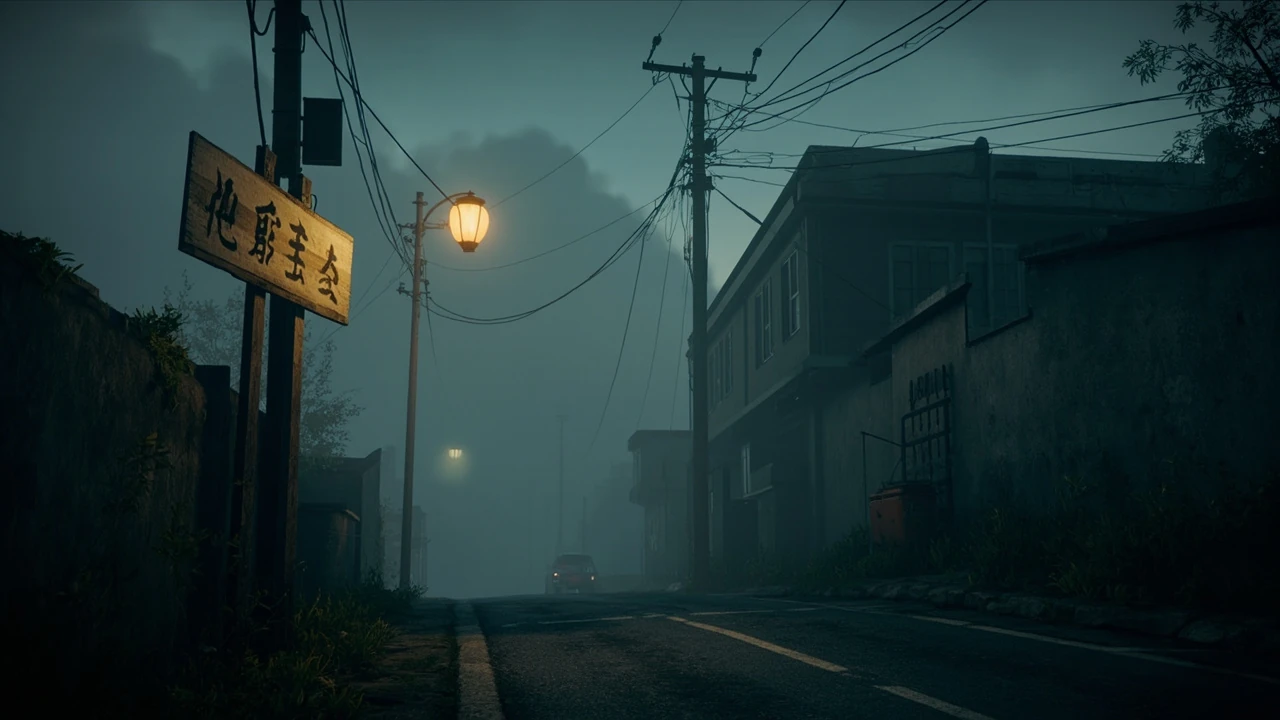

Silent Hill f walkthrough: how this guide is organized
A reliable silent hill f walkthrough needs more than a list of chapter names. Silent Hill f takes place in the fictional Japanese town of Ebisuoka and follows high school student Hinako as she deals with a personal crisis while the town transforms around her. The game mixes exploration, combat, light puzzle solving, and a sanity system that changes how encounters feel as the story progresses. Because the route and difficulty of each chapter depend on player choices, upgrade spending, and which items you pick up along the way, this guide is built around chapter structure first, then layered with the supporting decisions that make each run smoother.
Rather than presenting a single canonical path, the silent hill f walkthrough below separates verified chapter content from player-facing decisions. The current chapter hub on Game8 is the most useful reference for the overall route, and you can cross-check the broader chapter list there. Use the sections that follow to plan a first run, clean up missed items on New Game Plus, and decide which upgrades to invest in before tackling the harder late-game fights.
What to know before you start Silent Hill f
Before getting into chapter routes, it helps to set a few expectations. Silent Hill f is set in 1960s Japan, and the visual language, music, and sound design lean into the period. Combat is real-time with a stamina gauge, and there is no traditional map overlay; instead, you unlock waypoints and read signs to find objectives. The sanity mechanic, called the Omori system, changes enemy behavior and combat as Hinako’s mental state deteriorates, so the same enemy can become much harder if you take too much mental damage or stay in dark rooms for too long.
It is also worth understanding the difference between items, weapons, and key objects. Items restore stamina or sanity, weapons are used in combat and degrade, and key objects are needed to unlock doors, solve puzzles, or progress side paths. You can carry a limited number of healing items, so a good silent hill f walkthrough always notes which pickups are safe to leave behind on a first run.
Basic systems to understand on your first run
- Stamina governs both attacks and dodges. Running out at the wrong moment is the most common cause of early deaths.
- Sanity shifts the visual filter, audio, and enemy aggression. Lowering it makes the game harder, not easier.
- Save points are limited and tied to specific safe rooms. Plan your return routes around them.
- Weapons degrade. Do not rely on the same tool from start to finish.
- Many areas revisit earlier locations. Memorizing layouts pays off in later chapters.
Chapter 1: Welcome to Ebisuoka
The opening chapter establishes Ebisuoka as a normal residential town and gives Hinako her first encounters with the fog. From a walkthrough perspective, this chapter is short, low in combat, and designed to teach the stamina and dodge rhythm. Most of the early items you find are healing consumables or basic melee weapons, so the practical goal of the silent hill f walkthrough in this chapter is to learn the input timing rather than to optimize a route.
You will move through Hinako’s neighborhood, follow school friends along familiar streets, and notice that the environment gradually becomes quieter. Doors that were open during the day become locked at night, and the same streets feel longer in the dark. Treat this chapter as a tutorial: avoid unnecessary fights, read every note you find, and return to any safe room you discover because the game will reuse it later.
Things to prioritize in Chapter 1
- Pick up the first melee weapon from the school corridor rather than the street, since it has better reach.
- Save at least one healing item for the alley fight, which is the chapter’s main damage check.
- Talk to every named classmate to unlock minor dialogue that resurfaces in later chapters.
Chapter 2: The school and the first real puzzle
Chapter 2 moves the action into Ebisuoka Middle School and introduces the first puzzle-heavy section of the silent hill f walkthrough. The school is also where the first major locker-related objective appears, and players who want a focused walkthrough of that objective can check a dedicated silent hill f locker code reference for the combination sequence and the safer room to return to afterwards. Beyond the locker objective, the rest of the chapter is built around reading notices, finding classroom keys, and reaching the roof area while the fog outside changes the courtyard.
Combat intensity steps up here. The first stamina-heavy enemy appears in a stairwell and punishes players who try to mash attack instead of waiting for an opening. The most common failure in this chapter is overusing the dodge button and running out of stamina just before a critical hit, so the recommended approach is to alternate one attack with one dodge and let the stamina bar refill between groups.
Chapter 2 decision points and what they affect
- Choosing to investigate the music room first unlocks a side conversation that hints at the shrine route in Chapter 3.
- Returning to the courtyard before the second floor changes which enemy spawns on the return trip.
- Spending a healing item in the gym hallway is usually safer than saving it for an unknown later fight.
Chapter 3: The shrine and the transition to the fog
Chapter 3 is where Silent Hill f’s horror design fully takes over. The chapter begins with a path through a wooded shrine area outside town, then transitions into the fog-covered version of Ebisuoka that most players associate with the game. Combat encounters are now affected by sanity, and the same enemy can become more aggressive or behave unpredictably depending on how you manage your Omori meter. A good silent hill f walkthrough for this chapter has to address both route planning and the sanity curve.
Route-wise, the chapter is linear until the shrine clearing, where the game branches based on whether you investigate the well, the torii gate, or the small hut. All three options are valid, but each one leads to a different mid-chapter boss and changes which supporting characters show up in Chapter 4. If you are running the game for the first time, it is fine to follow the most obvious path; the branching only matters if you are planning multiple runs.
Sanity management rules for Chapter 3
- Avoid staying in completely dark rooms for more than a few seconds. Use your flashlight sparingly to prevent the sanity drop.
- Listen for breathing or whisper cues that signal a sanity event, and retreat to a safe room if you hear them.
- Some consumables restore sanity instead of health. Save them for the boss arena, not for trash fights.
Chapter 4: The hospital wing and the changing enemies
Chapter 4 takes place inside a hospital-like location that mirrors the school from earlier chapters. The silent hill f walkthrough becomes more combat-focused here because enemy variants start to mix melee and ranged attacks, and the hallways are long enough that running past a group is rarely a safe option. The chapter is also where the upgrade system becomes meaningful: you can now invest points into stamina, attack power, or sanity resistance, and your choice starts to shape the rest of the run.
The most useful tip is to clear rooms in a consistent direction. The hospital has multiple floors with similar layouts, and the save points are spaced far apart. If you keep turning back to the same save point, you will spend more resources than you can afford. Instead, push forward to the next safe room, then backtrack for missed items if your resources allow it.
Upgrade priority for Chapter 4
- Stamina is the safest first investment because it benefits both attack and dodge timing.
- Sanity resistance becomes more important in Chapter 5 and 6, so plan one or two points for it before then.
- Attack power is tempting, but the late game rewards survivability more than raw damage.
Chapter 5: The flooded streets
Chapter 5 changes the visual language again, with flooded streets and broken bridges forcing new route decisions. The silent hill f walkthrough for this chapter is mostly about water level navigation and figuring out which side streets still have a clear path. Combat does not disappear, but the main threat is environmental: you can fall into deep water, slip on wet surfaces, or get caught by enemies that use the water for fast approaches.
If you have already unlocked the major shrine branch in Chapter 3, Chapter 5 becomes easier because you will have seen some of the side characters who now offer help in flooded zones. If not, the chapter is still completable with careful stamina management, but expect to lose a few healing items to the longer route.
Flood zone navigation tips
- Walk, do not run, on wet surfaces. Running drains stamina and can trigger a slip animation.
- Use elevated walkways and rooftops whenever possible. They are longer but far safer than wading.
- Listen for the water sound change that signals an enemy approaching from a new direction.
Chapter 6: The final descent
Chapter 6 is the late game, and the silent hill f walkthrough here focuses on preparation rather than discovery. The chapter opens with a quiet recap area, then escalates quickly into multiple boss fights and a long descent through a transformed version of Ebisuoka. Enemies from earlier chapters return with new moves, and the sanity system reaches its most punishing level. This is the chapter where your upgrade plan from Chapter 4 either pays off or falls short.
The route itself is fairly linear, but there are two optional side areas that grant extra upgrade materials. If you are confident in your current build, both are worth doing. If you are low on healing items, skip them and head for the main objective. The game does not punish you for missing these optional zones, but it does reward you for clearing them.
Final chapter preparation checklist
- Confirm you have at least one fully repaired weapon before the first boss.
- Keep a sanity-restoring consumable in reserve for the second boss, which has a horror element that drains sanity quickly.
- Do not spend all your upgrade points on attack. Save one or two for the final encounter.
Endings and what your walkthrough choices actually change
Silent Hill f has multiple endings, and the choices that lead to them are spread across the chapters rather than concentrated in a single decision. The silent hill f walkthrough does not need to dictate a specific ending on the first run, but it is useful to know the categories of choice that matter. Some decisions affect who survives the final chapter, others affect which version of the final scene you see, and a small number affect a post-credits scene that hints at the broader series continuity.
Because ending conditions depend on a mix of dialogue choices, combat outcomes, and item usage, a good approach is to play the first run naturally, then look up the specific choices you want on a second run. There is no single canon route, and the game is designed so that each ending feels like a reasonable outcome rather than a clear good or bad path.
Choice categories that influence endings
- Dialogue responses in quiet moments, usually with named supporting characters.
- Whether you spare or finish off certain bosses and mid-boss enemies.
- Optional side objectives completed in Chapters 3, 5, and 6.
- How aggressively you used consumables and upgrades throughout the run.
New Game Plus: what carries over and what resets
After finishing the main story, New Game Plus lets you replay with most upgrade points, weapons, and consumables carried over. Enemies become tougher, and sanity drops faster, but you also have the resources to handle the harder curve. For players who want a clean silent hill f walkthrough reference, New Game Plus is the right time to plan for specific endings because you will already know the chapter structure and can adjust at the right decision points.
Items marked as key objects generally do not carry over, which means puzzle solutions still need to be solved from scratch. Weapon upgrades, however, do carry over, so you can begin the second run with a much stronger loadout. Plan your first run to collect upgrade materials, and your second run to optimize the choices you want.
What New Game Plus changes in practice
- Enemy health and damage scale up, but drop rates for upgrade materials also increase.
- Some previously locked shortcuts open up, making backtracking faster.
- Save room layout stays the same, so the safe room map you built mentally still applies.
Common Silent Hill f walkthrough mistakes
Even experienced players repeat a few predictable mistakes in Silent Hill f, and a good walkthrough flags them early. Most of these mistakes are not about route planning but about resource timing. The game gives you the tools to recover, but only if you recognize the warning signs before the situation gets out of hand.
Resource and timing mistakes to avoid
- Using healing items too early in a chapter, leaving you dry for the real threat.
- Sprinting everywhere instead of walking, which drains stamina before combat.
- Ignoring safe rooms and trying to push through long sections without saving.
- Hoarding consumables until the end of a run, then dying right before a boss.
- Forgetting to repair weapons, which leads to broken gear mid-fight.
Tools and prep that make the walkthrough smoother
Outside of the game itself, a few preparation steps make any silent hill f walkthrough easier to follow. Saving chapter notes for yourself, screenshotting map changes, and tracking which key objects you have picked up reduces the amount of time you spend wandering. The game does not have a quest log in the traditional sense, so the player-built log is what makes the route feel linear even when the environment is designed to feel disorienting.
Recommended player-side preparation
- Keep a short chapter-by-chapter note of which key objects you have collected.
- Mark safe rooms on a sketch so you do not waste stamina searching for the nearest one.
- Write down puzzle solutions in your own words so you understand the logic, not just the answer.
Silent Hill f walkthrough at a glance
The table below summarizes the chapter focus, main threat, and the resource that matters most. Use it as a quick reference when you plan a run or decide whether to backtrack for missed items.
| Chapter | Primary focus | Main threat | Key resource |
|---|---|---|---|
| 1 | Movement and stamina basics | Light combat encounters | Healing consumables |
| 2 | School puzzles and first key | Stairwell enemy | Stamina management |
| 3 | Shrine routes and fog transition | Sanity drops | Sanity-restoring items |
| 4 | Hospital combat and upgrades | Mixed enemy groups | Upgrade points |
| 5 | Flooded streets navigation | Environmental damage | Safe room access |
| 6 | Final descent and boss chain | Boss fights and sanity pressure | Weapon durability |
Item and resource priority by chapter
This second table breaks down which pickups matter most in each chapter and which ones are safe to skip on a first run. Pair it with the chapter summary above when you are deciding whether to backtrack after clearing the main objective.
| Chapter | Pick up first | Safe to skip on first run | Risk if ignored |
|---|---|---|---|
| 1 | First melee weapon, healing consumable in the alley | Optional notes and cosmetic items | Low; you can re-enter Chapter 1 areas in New Game Plus |
| 2 | Classroom key, locker combination clue | Optional audio logs on the second floor | Moderate; missing a key delays the roof access cutscene |
| 3 | Sanity-restoring consumable, shrine talisman | Decorative offerings at the torii gate | Moderate; sanity events hit harder without a backup consumable |
| 4 | Upgrade materials, second melee weapon | Optional medical records on the upper floors | High; the late-game boss chain punishes weak loadouts |
| 5 | Repair kit, stamina-restoring item | Optional side character sidequests in flooded alleys | Moderate; you lose dialogue but not progression |
| 6 | Final weapon repair parts, sanity backup | Optional side areas that grant bonus upgrade materials | Low to moderate; the main path stays open either way |
The two tables are orientation tools. For a full breakdown of each chapter’s puzzles and item locations, the official Silent Hill f walkthrough chapter hub is the most reliable current reference and pairs well with this guide’s emphasis on resource and sanity management. Players who want a deeper look at one of the trickier objectives in Chapter 2 can also check the dedicated silent hill f locker code reference for the safer room route through the school puzzle section.
Frequently asked questions
How long is Silent Hill f?
Most players finish the main story in around 15 to 20 hours, depending on how much optional exploration they do. A focused run that skips most side content can finish faster, while a completionist run with multiple endings will take considerably longer.
Is there a map in Silent Hill f?
There is no full overlay map. Instead, you unlock waypoints and read signs to find objectives. Many players find it useful to sketch their own map of each district, since the layout changes as the fog and sanity mechanics progress.
What is the sanity system in Silent Hill f?
Sanity, also called the Omori system, tracks Hinako’s mental state. When it drops, the visual filter, audio cues, and enemy behavior all change. The game becomes harder rather than easier as sanity falls, so managing it is part of every chapter.
Can you play Silent Hill f in any order?
No, the main chapters are sequential. Optional side objectives within a chapter can sometimes be done in different order, but the overall story route is fixed. New Game Plus is the intended way to revisit chapters with different choices.
What is the best starting weapon in Silent Hill f?
Most players prefer the longer melee weapon found in the school corridor during Chapter 2 because it has better reach than the early street weapon. The trade-off is that it is heavier and uses more stamina per swing, so it rewards patient timing.
Do choices in Silent Hill f affect the story?
Yes. Dialogue responses, combat outcomes, and side objective completion all feed into the ending you receive. There is no single good ending, and the game is designed so each outcome feels like a reasonable conclusion based on your run.
Should I use healing items early in Silent Hill f?
It depends on the chapter. In early chapters, using one or two healing items to stay healthy is usually safer than hoarding them. In late chapters, save at least one sanity-restoring item for the boss arena, where the pressure is highest.
Is Silent Hill f scary for new players?
Silent Hill f is a horror game and uses psychological tension rather than jump scares. Players who are new to horror can still enjoy it by playing in short sessions, managing sanity carefully, and returning to safe rooms when the pressure builds up.
Does Silent Hill f have multiple endings?
Yes, there are multiple endings based on choices made throughout the chapters. You do not have to unlock all of them in one run, and New Game Plus is the intended way to explore the alternative outcomes.
What carries over in New Game Plus?
Most upgrade points, weapons, and consumables carry over. Key objects usually do not, which means puzzle solutions need to be rediscovered on each run. Enemy difficulty also increases, so the carryover does not trivialize the second playthrough.
Leave a Reply